
Tile 101: Porcelain vs Ceramic
17th Nov 2026
Porcelain vs. Ceramic Tile: What's the Difference?
Whether you're shopping online or walking into any tile showroom, you'll see them side by side; they can look almost identical. So, what actually separates porcelain from ceramic? The answer affects how your tile performs, how it's installed, and what it costs.
Here's a clear breakdown so you can choose the right one for your project.
The Basics: How They're Made
Both porcelain and ceramic are made from clay, shaped, and fired in a kiln. The differences come down to the type of clay, the firing temperature, and the resulting density.
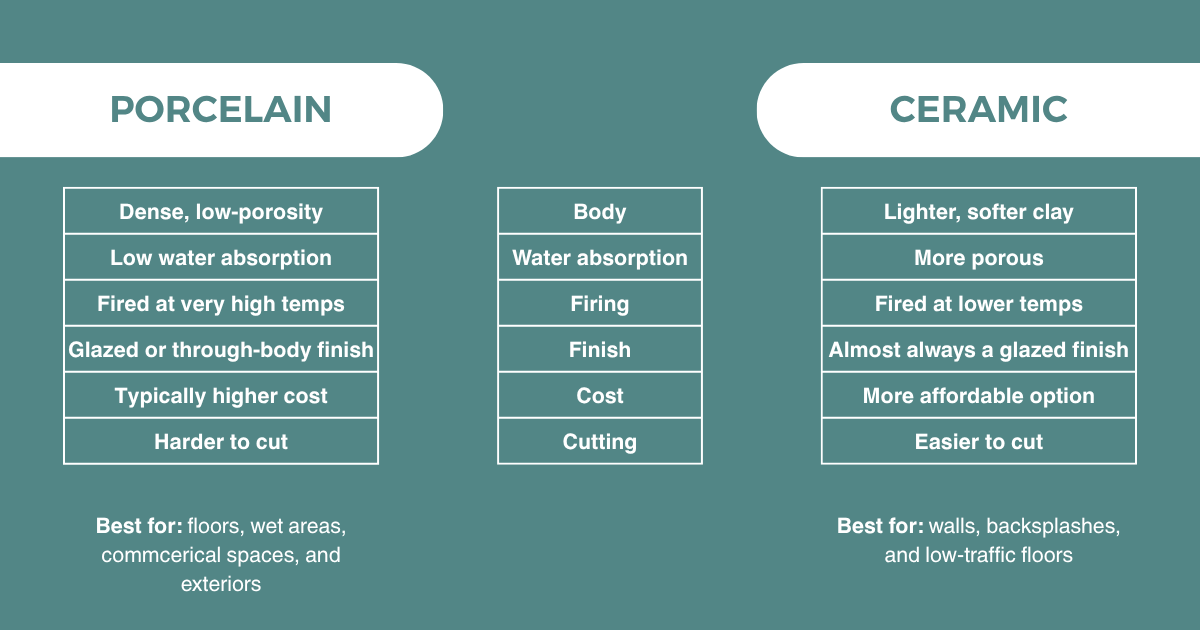
Porcelain is a dense, low-porosity tile fired at very high temperatures. True porcelain tests at 0.5% water absorption or lower. That tight, dense body is what gives porcelain its toughness.
Ceramic is a lighter-bodied clay tile fired at lower temperatures than porcelain. It's almost always glazed for color and protection. It's softer and more porous, which makes it easier to work with but less resistant to moisture and wear.
Durability and Water Resistance
Because porcelain absorbs so little water, it resists moisture, staining, and daily wear far better than standard ceramic. That's why porcelain is a go-to for showers, bathroom floors, entryways, and other spots that see water and heavy use.
Ceramic holds up well in the right setting, but its softer, more porous body means it's more vulnerable to chips, scratches, and moisture over time, especially on a floor.
Glazed vs. Through-Body
Porcelain comes in two constructions:
- Glazed porcelain has a surface glaze for color and pattern, which allows for convincing looks like wood, stone, and concrete.
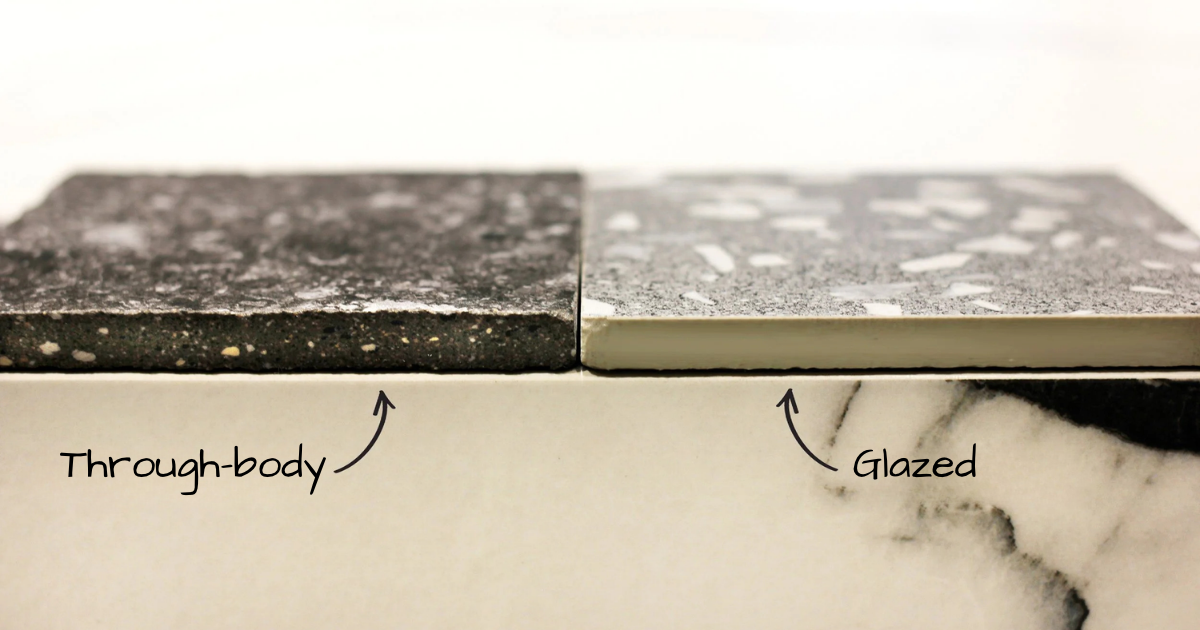
- Through-body porcelain has the color running through the entire tile. If it chips, the damage is far less noticeable because the tile looks the same all the way through.
Ceramic is almost always glazed. If a glazed ceramic tile chips, the lighter clay body underneath can show.
Try this: Compare the through-body edge of a porcelain sample next to a glazed edge. It's the fastest way to see for yourself why chips are far less noticeable on through-body tile.
Where to Use Each
Porcelain works nearly anywhere:
- Commercial floors and high-traffic residential floors
- Wet areas like showers, tub surrounds, and bathroom floors
- Exteriors, increasingly as porcelain pavers for patios and walkways
Ceramic shines in lower-stress spaces:
- Walls and backsplashes
- Lower-traffic residential floors, such as a guest bathroom
- Decorative accents and trim
Ceramic isn't the first recommendation for commercial floors or exteriors, where you want the toughest material available.
Design tip: Ceramic is also where many of the most color-saturated decorative lines live. Once you've settled on your floor tile, an accent wall or backsplash is a great place to bring in that bold color.
Cost and Installation
This is where ceramic earns its fans.
Ceramic is generally more affordable and easier to cut, which can mean faster installation and lower labor costs. It's a smart choice when you're tiling a large wall area on a budget.
Porcelain typically costs more, and its density makes it harder to cut. Installers usually need a wet saw with the right blade, so it's worth confirming your installer is comfortable working with it. The upfront investment often pays off in longevity, especially on floors.
Side-by-Side Comparison
So, Which Should You Choose?
A simple rule of thumb:
- Choose porcelain for floors, showers, high-traffic areas, commercial spaces, and anything outdoors.
- Choose ceramic for walls, backsplashes, and low-traffic areas where budget and ease of installation matter most.
In many projects, the best answer is both: durable porcelain on the floor and a more budget-friendly ceramic on the walls.
Still not sure? Ordering samples is the best way to see and feel the difference in your own space. Compare the weight, the edge, and how each looks in your lighting before you commit.